Welcome to Taylor's University Biosciences Club page!

Read about our trips, findings, programmes and adventures!

Games Day for the March Intake 2012!

We laughed, learned, and got to know each other!

Treasure Hunt!

We love the thrill of finding, hunting, and winning!

HPV Awareness Campaign

We provided a chance for people take the HPV vaccine at a lower price!

An Evening Trip to Kuala Selangor!

We love the fireflies there and how they glow!

Showing posts with label articles. Show all posts

Sunday, April 14, 2013

Mini LED Probes To Manipulate the Brain With Light

Technology advancement for the health and advancement of humans - in the mini form. Scientists to the rescue! :)
Extracted from Wired.com


Figure 1: LED probes that are small enough to fit through the eye of  needle.

Tiny, glowing probes packed with LEDs and sensors are scientists’ newest tool for measuring and manipulating the brain and other living tissues. They’re flexible, they can operate wirelessly, and yes, they’re small enough to fit through the eye of a needle.

This kind of device could potentially improve researchers’ ability to influence neural activity in live animals and measure a variety of physiological and biochemical processes, says applied physicist and neuroscientist Mark Schnitzer of Stanford University, who was not involved in the work. Such bio-compatible electronics also offer new possibilities for manipulating living tissue based on rapid feedback from sensors embedded in the tissue.

One obvious application in brain research is for optogenetics experiments, which involve genetically modifying neurons to make them fire in response to light. In recent years neuroscientists have used these methods to examine the neural circuits involved in everything from drug addiction, to depression, to Parkinson’s disease. But getting light to areas deep inside the brain is tricky.
 Figure 2: Illuminated brain - an LED probe lights up a mouse brain.
In one experiment, the researchers implanted a probe into the brain of a mouse. Then they used pulses of light to stimulate neurons in a part of the brain’s reward pathway. Mice who received pulses in a particular arm of a Y-shaped maze soon learned to spend more time there, just as they would if they’d been rewarded with food.

In any case, tweaking neural activity is just a small part of what the probes can do. In addition to LED arrays, they also contain photodetectors, electrodes for stimulating and recording electrical activity, and temperature sensors that double as microheaters


To read more, click here.

Wednesday, April 03, 2013

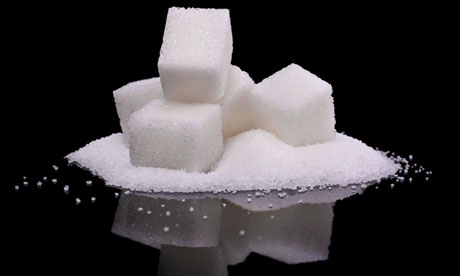
"Sugar, not fat, exposed as deadly villain in obesity epidemic"

We've always known all along that obesity is due to overloading of calories. But is it just really just because of our fat intake? This article explains it. 

Excerpts from The Guardian:


Sugar – given to children by adults, lacing our breakfast cereals and a major part of our fizzy drinks – is the real villain in the obesity epidemic, and not fat as people used to think, according to a leading US doctor who is taking on governments and the food industry.
Dr Robert Lustig, who was this month in London and Oxford for a series of talks about his research, likens sugar to controlled drugs. Cocaine and heroin are deadly because they are addictive and toxic – and so is sugar, he says. "We need to wean ourselves off. We need to de-sweeten our lives. We need to make sugar a treat, not a diet staple," he said.
"The food industry has made it into a diet staple because they know when they do you buy more. This is their hook. If some unscrupulous cereal manufacturer went out and laced your breakfast cereal with morphine to get you to buy more, what would you think of that? They do it with sugar instead." 
As a paediatrician who specialises in treating overweight children in San Francisco, he has spent 16 years studying the effects of sugar on the central nervous system, metabolism and disease. His conclusion is that the rivers of Coca-Cola and Pepsi consumed by young people today have as much to do with obesity as the mountains of burgers.
It has been added to your diet, "kids have access" to it, and it is there in all sorts of foods that don't need it, he says. When high-fat foods were blamed for making us overweight, manufacturers tumbled over each other to produce low-fat products. But to make them palatable, they added sugar, causing much greater problems.
Cutting calories is not the answer because "a calorie is not a calorie". The effect of a calorie in sugar is different from the effect of a calorie in lean grass-fed beef. And added sugar is often disguised in food labelling under carbohydrates and myriad different names, from glucose to diastatic malt and dextrose. Fructose – contained in many different types of sugar – is the biggest problem, and high-fructose corn syrup, used extensively by food manufacturers in the US, is the main source of it.


It is not a case of eradicating sugar from the diet, just getting it down to levels that are not toxic, he says. The American Heart Association in 2009 published a statement, of which Lustig was a co-author, saying Americans consumed 22 teaspoons of it a day. That needs to come down to six for women and nine for men.
"That's a reduction by two thirds to three quarters. Is that zero? No. But that's a big reduction. That gets us below our toxic threshold. Our livers have a capacity to metabolise some fructose, they just can't metabolise the glut that we've been exposed to by the food industry. And so the goal is to get sugar out of foods that don't need it, like salad dressing, like bread, like barbecue sauce." There is a simple way to do it. "Eat real food."

Lustig's food advice 

• Oranges. Eat the fruit, don't drink the juice. Fruit juice in cartons has had all the fibre squeezed out of it, making its sugars more dangerous.
• Beef. Beef from grass-fed cattle as in Argentina is fine, but not from corn-fed cattle as in the US.
• Coca-Cola, Pepsi and other sweetened beverages. These deliver sugar but with no nutritional added value. Water and milk are the best drinks, especially for children.
• Bread. Watch out for added sugar in foods where you would not expect it.
• Alcohol. Just like sugar, it pushes up the body's insulin levels, which tells the liver to store energy in fat cells. Alcohol is a recognised cause of fatty liver disease.
• Home-baked cookies and cakes. If you must eat them, bake them yourself with one third less sugar than the recipe says. Lustig says they even taste better that way.


Do you think you will be able to reduce your daily sugar intake? Read the whole article here.

Sunday, December 09, 2012

Self help: Forget positive thinking, try positive action!


The self-help industry is mired in ideas about positive thinking that are at best ineffective and at worst destructive. If you want to be more confident or successful, says Richard Wiseman, the best thing to do is act the part.

How to change
Action speaks loudest

Here are 10 quick and effective exercises that use the As If principle to transform how you think and behave.
HAPPINESS: Smile
This is the granddaddy of them all. As Laird's study demonstrated, smile and you will feel happier. To get the most out of this exercise, make the smile as wide as possible, extend your eyebrow muscles slightly upward, and hold the resulting expression for about 20 seconds.
WILLPOWER: Tense up
As Hung's experiments show, tensing your muscles boosts your willpower. Next time you feel the need to avoid that cigarette or cream cake, make a fist, contract your biceps, press your thumb and first finger together, or grip a pen in your hand.
DIETING: Use your non-dominant hand
When you eat with your non-dominant hand you are acting as if you are carrying out an unusual behaviour. Because of that you place more attention on your action, do not simply consume food without thinking about it, and so eat less.
PROCRASTINATION: Make a start
To overcome procrastination, act as if you are interested in what it is that you have to do. Spend just a few minutes carrying out the first part of whatever it is you are avoiding, and suddenly you will feel a strong need to complete the task.
PERSISTENCE: Sit up straight and cross your arms
Ron Friedman from the University of Rochester led a study where volunteers were presented with tricky problems to see how long they persevered. Those who sat up straight and folded their arms struggled on for nearly twice as long as others. Make sure your computer monitor is slightly above your eye-line and, when the going gets tough, cross your arms.
CONFIDENCE: Power pose
To increase your self-esteem and confidence, adopt a power pose. If you are sitting down, lean back, look up and interlock your hands behind your head. If you are standing up, then place your feet flat on the floor, push your shoulders back and your chest forward.
NEGOTIATION: Use soft chairs
Hard furniture is associated with hard behaviour. In one study Joshua Ackerman at the MIT Sloan School of Management had participants sit on either soft or hard chairs and then negotiate over the price of a used car. Those in the hard chairs offered less and were more inflexible.
GUILT: Wash away your sins
If you are feeling guilty about something, try washing your hands or taking a shower. Chen-Bo Zhong from the University of Toronto discovered that people who carried out an immoral act and then cleaned their hands with an antiseptic wipe felt significantly less guilty than others.
PERSUASION: Nod
If people nod while they listen to a discussion they are more likely to agree with the points being made. When you want to encourage someone to agree with you, subtly nod your head as you chat with them. Research led by Gary Wells of Iowa State University shows that they will reciprocate the movement and find themselves strangely attracted to your way of thinking.
LOVE: Open up
Couples in love talk about the more intimate aspects of their lives. Research carried out by Robert Epstein, founder of the Cambridge Centre for Behavioural Studies, shows that the opposite is also true – more intimate chat makes people feel attracted to each other. If you are out on a date, get the other person to open up by asking what advice they would give to their 10-year-old self, or what one object they would save in a house fire.

----------------------------------------
If you would like to read the full article (it's tremendously interesting! ;), click HERE to go to the original article in The Guardian online!

Monday, August 13, 2012

August's Feature Article!

Written by: Heng Qian Wen


Diagram 1. Fresh ABM mushroom

Cancer, as terrifying as it sounds, is a very common disease nowadays which affects humans as well as animals. Well, look on the bright side, we have Agaricus Blazel Murill (ABM) mushroom! It is one of the most highly regarded cancer fighters among plant foods. This mushroom has been scientifically proven to be effective in boosting immune system and acts as a complement to cancer treatment.

The discovery of the ABM mushroom has led to many research, primarily focused on the anti-tumor properties of beta-1,3 D-glucan and beta-1,6 D-glucan. These polysaccharides aid in the production of T-cells, interferon and interleukin to prevent the reproduction, spread and relapse of cancer cells as well as virus-infected cells. And with that, it has several medicinal effects such as anti-tumour effect, anti-cancer effect, preventive effect, blood glucose reducing effect, blood pressure, cholesterol and arteriosclerosis reducing effect. Besides, it is found to be effective against sigmoid colonic cancer, ovarian cancer, breast cancer, lung cancer and liver cancer as well as most solid tumors.

Diagram 2. Dried ABM Mushroom


ABM mushrooms are rich in protein, vitamin B1, B2 and have other important minerals needed in human body such as sodium, phosphorus, calcium, potassium and iron. Vitamin D2 which is converted from  ergosterol that is present in this mushroom, is very useful in increasing absorption of calcium in the body. Thus, these nutrients help to protect and strengthen bone health, preventing diseases such as osteoporosis. Research shows that 100g of ABM mushrooms contains 9.65mg of iron, which is by far the highest percentage of iron found among plant foods. On top of that, until today no known side effects has been linked to the consumption of this mushroom.

In a nutshell, ABM mushroom is very effective in preventing cancer as it is scientifically proven that it eliminates 90% of the cancer cells. Without a doubt, cancer sufferers will have a slight hope in surviving cancer and pull themself out of this devastated tragedy by consuming this mushroom.